Wednesday, 27 June 2012

I’ve created a monster!

This time last year my town-dwelling nephew, Oli, came to stay with me in the Yorkshire Dales National Park for three weeks. My initial excitement quickly turned to horror when I realised I knew very little about keeping a sixteen-year-old boy entertained for very long.

Panic set in as I stared at my modest collection of console games and ‘girlie’ CDs, DVDs, and books. Then I looked out the window – “why was I trying to create a home from home for him, he’s coming to a national park,” I said to myself, “get out and help him discover this magical place for himself.”

Oli on the path next to Malham Tarn, GPS in hand
With gusto I grabbed my highlighter pen and a copy of The Visitor and got down to work, circling all the family-friendly events happening during his visit, as well as ideas for things to do and places to visit.

We climbed hills, played Pooh sticks (no one is ever too old or too young for Pooh sticks), skimmed stones, visited local attractions, and gave every last thing a go at the local agricultural shows and game fairs. We also went on a few of the events organised by the National Park Authority. 

As is par for the course with teenagers, the monosyllabic grunts that I was afforded during his stay turned to gushing enthusiasm once in different company.

Back at his home he couldn’t stop talking about the introduction to geocaching session we had attended near Malham Tarn. He had loved it - working with the GPS gadget, walking across a beautiful landscape, hunting for the cache box that contained prizes that he could swap – the challenge of this modern day treasure hunt had played right into his competitive and active nature.

Geocaching is a real-world outdoor treasure hunting game. Players try to locate hidden containers, called geocaches, using GPS-enabled devices and then share their experiences online.

Intrigued, my sister Judith agreed to take Oli out geocaching again that summer. She bought a cheap ‘pre-loved’ GPS to get them started, and signed up to geocaching.com so they could find the co-ordinates of nearby caches and log the ones they find.  

Little did I know the impact that afternoon on the moors around Malham would have!

A year on and the pair have logged nearly 250 caches and hidden seven of their own. They have found them in phone boxes and by harbours, deep in forests and high on hills, and the whole family have even been out on mass caches with other enthusiasts. For my birthday last month they even sent me ‘Log My Dog’ tags so I can turn my two greyhounds into walking caches!

I truly have created two geocaching monsters. But this obsession does not seem too uncommon.

Geocaching – using multi-million dollar
satellites to find Tupperware in the
 woods/long grass/hedges...
Visit Aysgarth Falls National Park Centre and you may meet our Information Advisor Janet who has logged 444 geocaches in the past five years.

Calling themselves the ‘Dales Golden Girls’, Janet goes out with friends from work searching for caches. She said “It’s such a fascinating hobby. It keeps me active and I get to visit places I’ve never been to before. There are caches out there as small as your fingernail to the size of a crate, and they are everywhere - from cities to fields to mountains. It’s so exciting and fun.”

Her enthusiasm for the pastime spills over into her working life. On her recommendation a couple from Derby visiting the National Park Centre whilst on holiday, rented a GPS and found their first cache. A year later, remembering Janet’s geocaching.com pseudonym, they got back in contact to let her know that they had found over 800 caches since their holiday. The most recent was one that Janet herself had found only weeks earlier. 

Next time you visit http://www.yorkshiredales.org.uk/, think about the behind-the-scenes guy, Stuart, who even had his own geocaching coins minted. He now tracks their progress across the world as geocachers collect them from one cache, deposit them in another, and record their finds on the internet.
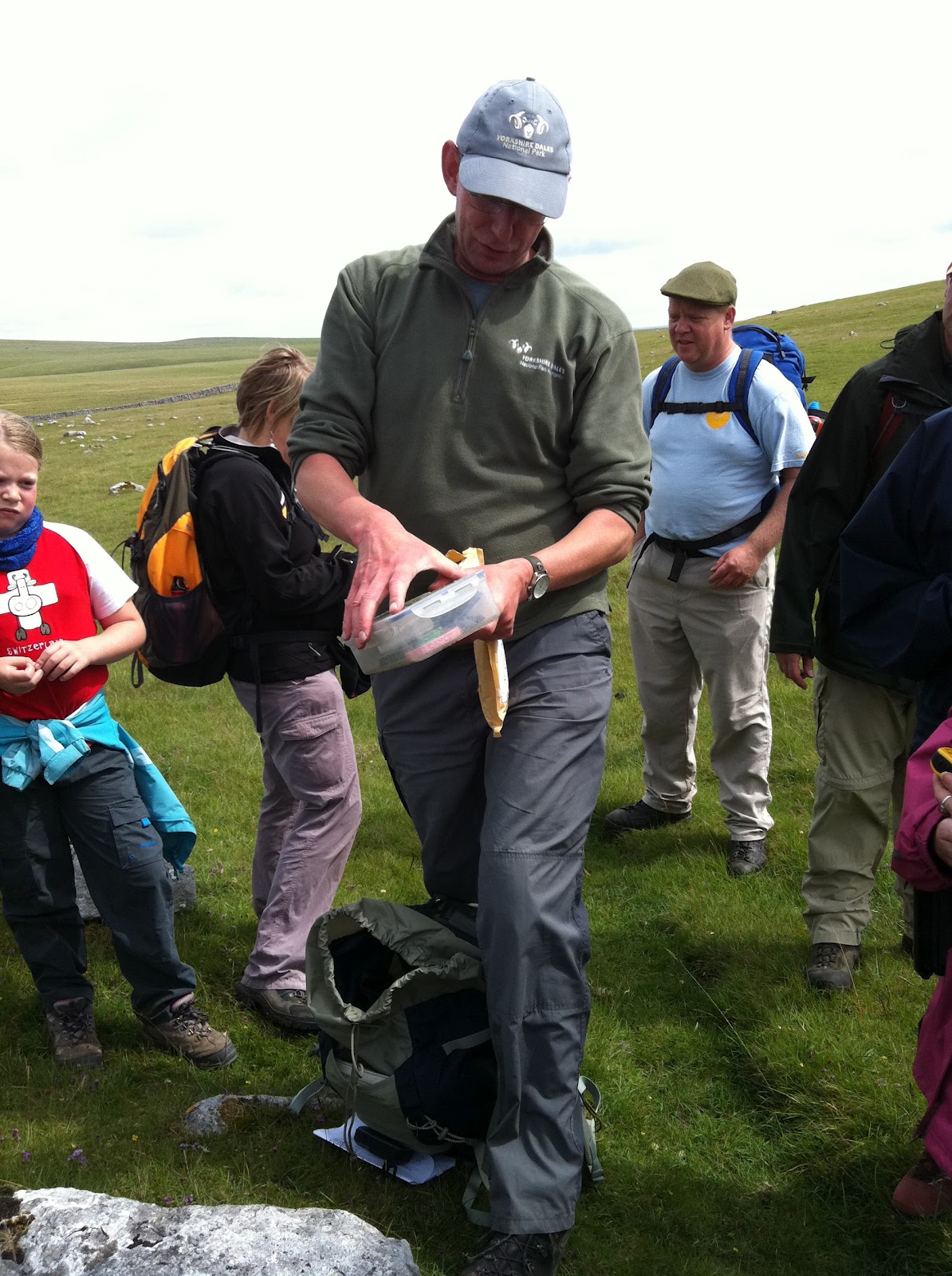
A Dales Volunteer shows
the group a cache
You can try geocaching for yourself at the upcoming National Park event for beginners on 7 July or learn more about the craze, where to hire GPS equipment and National Park caches from our website www.yorkshiredales.org.uk/geocaching

Saturday 7 July,11:00 to 15:00
National Park Event - Hidden GPS Treasure (Geocaching for Beginners)
Meet Street Gate parking area, south Malham Tarn (grid ref SD 9038 6567)
A moderate 6 mile (10 km) walk that introduces geocaching - a 'treasure' hunt using handheld GPS units - as a new outdoor activity. If you have a GPS please bring it along - we have a limited number to borrow, please reserve in advance.
call 01729 833200 email malham@yorkshiredales.org.uk


Tuesday, 12 June 2012

A diamond in the landscape

It's been a bumper time of celebrations and nostalgia marking the Diamond Jubilee - and who are we to resist adding to the mix!

When Elizabeth II came to the throne in 1952, the Act that led to the creation of the UK’s National Parks had been passed just three years before. 

Enjoying a walking break in Malham, Easter 1954
(copyright Alan Watkinson)
Five National Parks had already been created and the boundary of the Yorkshire Dales National Park was being pondered over by the local authorities. Nearly seven hundred glorious square miles were eventually designated - and in 2014 it will be celebrating its own diamond jubilee.

It seemed a good excuse (as if we needed one) to enjoy some super old photographs supplied by good friends of the National Park, looking back at how we lived, worked and played here when the young Queen was taking on her first duties.

**************************************
We hope you enjoy these photos from our Yorkshire Dales National Park Flickr page. Please do share yours with us, of all your experiences of this special place - we would love to hear from you!

Friday, 1 June 2012

A grand day out

What are you and your family up to this half term? Busy running a website offering everything you need to know about things to do with children under 5 in and around Skipton as well as being a mother of two, our guest blogger Kate Taylor can’t think of anything better than a grand day out in the Yorkshire Dales National Park.

Moving from London to Rylstone on 24 December last year was without doubt the very best Christmas present our family has ever given itself.

We have drawn back our curtains every day to the same breathtaking view and fallen in love with it afresh each morning.

Rylstone Cross
We’ve been smitten in all weathers. We’ve watched as mists have rolled in and completely covered Hetton, barely a quarter of a mile across the fields. We’ve seen frosts glittering across the dry stone walls. We’ve watched giant hailstones bounce and skid across our lane. We’ve watched transfixed as carpets of thick snow quietly fell. We’ve seen a rainbow arc over the escarpment up to Rylstone Cross. We’ve watched as winds whistled and whipped through the trees. Needless to say, we’ve also seen rain like we’ve never seen before. And we’ve been out in it too. All of it!

When the farmer turned the cows out last week, it heralded the start of summer. And, as if on cue, we pulled back our curtains and saw our amazing view of green field after bright green field lit up by glorious sunshine. 
Malham Cove - a gentle walk
 from the village centre

Not to waste a golden opportunity, we decided to head over to Malham. I grew up in Skipton so Malham has been a regular favourite for a long time. It’s a special place for us as my husband proposed to me on the limestone pavement at the top (terrified of losing the ring to a grike!) and we couldn’t wait to introduce our two and a half-year-old daughter Olive and 6 month-old son Ted to the cove.

We parked up at the National Park Centre where there are ideas for walks and days out, a weather forecast, audio-visual presentations, displays, maps, guides and - vitally for us and our young crew – toilets, and headed for the cove.

Malham’s a beautiful place to stroll through and Olive delighted in throwing stones into the beck as we went and popping in to Town Head Barn to try out the interactive displays, fascinated by the bird calls.

She twit twoo’d her way onto the accessible path that the Yorkshire Dales National Park Authority (YDNPA) has resurfaced. It’s great for pushchairs and means that, with relative ease, families can get up close to one of the jewels in the crown of God’s own county – if not the country.

As Ted snoozed on oblivious to the stunning scenery around him, we three breathed it in getting ever more excited as the cove which had seemed so tiny started to loom before us. Every single time, I am struck by how magnificent the sheer wall of limestone is. I wasn’t expecting my little girl to be quite as enthralled; but she was. She seemed even smaller and it seemed even bigger with her standing at its foot. We couldn’t drag her away from playing among the rocks, messing around in the stream and staring up, and up, and up trying to fathom what she was seeing. 
Young peregrine falcon at Malham Cove

It was fantastic to see so many families also out enjoying the sunshine. There was a special buzz around the peregrine falcon viewing points, which are set up each year in a partnership between the RSPB and the YDNPA to allow visitors to view these rare, spectacular birds as they nest, hunt and rear their chicks. The shorter height telescopes were a hit with children of all ages.

As we began the walk back to the car, stopping off for a quick ice cream and sit down at the village green, we decided we’d be back again soon. And the posters for the forthcoming Malham Safari played their part in tempting us! Running from 2 – 7 June, people are invited to hunt for the crowns hidden around the village as well as a host of other entertainments like the coconut shy, stream dipping with the YDNPA, archery and rifle range and duck races every day. This is a delightful event every year and this looks to be one of the best yet.

So, our first family trip to Malham was a date to remember in our ongoing love affair with this amazing part of the world, that we’re so privileged now to call home.

**********************************************************************************************************
Kate (33), and friend Angela Appleby, run a not-for-profit website called www.moobaakids.co.uk for families highlighting places to go and things to do with children aged 0-5 in Skipton and the surrounding area. The site has had overwhelming support since it launched in July last year – attracting on average more than 4,000 hits per month with an active community on Facebook and Twitter.

Friday, 25 May 2012

Chaffage...who needs it!

What are you doing this hot late May weekend? How does a 100km trek over 30 hours (yes – that is non-stop, day and night) across the Yorkshire Dales National Park appeal? 

Well, that’s exactly what over 1,000 intrepid walkers are up to as part of Oxfam’s Trailtrekker to raise money to help people in poverty.
Walkers on the Settle Loop get in their stride

While we ponder the epic size of that task over an ice cream, it's got us thinking about some of the challenges endurance events like this throw up and how best to prepare for this, and any hill walking - from what to pack to how to deal with blisters.  

As you would imagine, Yorkshire Dales National Park Authority staff are keen, outdoorsy types, so who better to ask for some top tips on that ultimate horror: chafing.

Lubricant seems to be the key – and an awful lot of it. 

For Ranger Matt – who, in 2010, ran an incredible 190 miles from coast to coast in just over 61 hours for charity – the solution is fundamental: “Vaseline all over your feet and E45 cream for your nether regions - nowt worse than undercarriage chaffage...”.

The thing about blisters is to stop them before they form, says Mark, our Access and Recreation Manager and a keen cyclist.

“You normally get a ‘hot spot’ often on the heel when going uphill – that is the time to put on tape to stop the rubbing from getting worse. Stopping and sticking your feet in a cold stream works wonders.”

He has a few words to say about saddle sores, too: “Cycle shorts are the answer and, if you don’t like the look, wear another pair of shorts or skirt over the top. 

“Nappy rash cream after the event sorts you out for the next day.”

Media Officer and walker Nick has a cheekier solution: “Sneak your kit into your companion’s bag, that’ll take the weight off your own feet!”

Whether you’re after a gentle stroll or a real leg stretcher, the National Park offers some truly spectacular hiking and has its fair share of famous long-distance routes. Did you know the UK’s first National Trail was our own Pennine Way which opened in the Dales in 1965? 

This summer the newest and the first designed specifically for horse riders, mountain bikers AND walkers - the Pennine Bridleway - will be launched, 52 miles of which cross the Yorkshire Dales National Park so there’s no better time to hit the trail.

And if you are one of the noble number taking part in Trailtrekker this weekend, we salute you and wish you a chafe-free adventure!

Even the most experienced walkers can end up in trouble if they don’t pay attention to a few simple rules – thinking about your clothing, equipment and, of course, the weather before you set out can ensure that your day is great not grim. For some handy advice, see www.yorkshiredales.org.uk/outandabout/planningyourvisit/beingsafe

Friday, 18 May 2012

The Yorkshire Dales sandwich, a real breadwinner


If you heard a weird rumbling noise in the Yorkshire Dales National Park this week, do not fear - it was only our tummies!

Turns out it’s British Sandwich Week 12 to 19 May and ever since hearing the news we can’t stop thinking about what makes a great Yorkshire Dales sarnie. And you see that started the hunger pangs, which started the tummies rumbling….

A pit stop while out
geocaching
The name ‘sandwich’ is British – born and bread! – and we have taken it to our hearts and into our countryside as a perfect accompaniment to lazy riverside afternoons and as fuel for days rambling or mountain biking on the fells.

No two sandwiches are ever the same and in the Dales we have our own preferences. To really experience a great Yorkshire Dales sandwich, leave your supermarket shop at home and call in to a local deli, café or pub when you’re in the National Park and get your chops around the real deal.  

For the most heavenly sandwich try fresh local bread, or even beer bread using ale from one our many local micro breweries, a good spread of butter made from the milk of local cows that graze on our sweet limestone pastures, and wash it all down with lashings of elderflower or dandelion and burdock cordial.

Using local Yorkshire Dales produce, these are some mouthwatering sandwich ideas that have made our ‘lunchbox list’… 

·          Limestone country beef and horseradish
·          Cream cheese mixed with cooked nettles and smoked salmon
·          Heather honey sandwiches (best after a good game of Pooh sticks)
·          Wensleydale cheese, apple and carrot with farmhouse chutney
·          Grassington air-dried ham with spinach and black pepper
·          A TLT: Kilnsey trout, lettuce and tomato
·          Rosemary and wild garlic marinated grilled lamb with cress
·          Swaledale ewes’ milk cheese and onion marmalade
·          Yorkshire chorizo and allotment salad leaves
·          The breakfast butty: free range farm eggs, Malham bacon and The Yorkshire Sausage
·          Grated Wensleydale cheese mixed with spring onion and mayo (known as a 'cheese savoury')
·          Foraged hedgerow fruit jam spread on top of a thick layer of hand-churned butter

Yorkshire Dales chorizo.
Photo courtesy of local
online butcher
If your favourite sandwich using produce from the Yorkshire Dales hasn’t made our list, post it in the comments below.
 
For more delicious celebrations of Yorkshire Dales food, please visit our sister blog www.yorkshiredalesfood.blogspot.co.uk and subscribe for updates.

For a list of farmers markets in and around the National Park visit our website www.yorkshiredales.org.uk/markets  

Tuesday, 1 May 2012

April showers bring forth May flowers..?

It’s just possible looking outside the window on this, the last day of April, that May could – could - begin warm and sunny. And this would be very welcome for any May Day revelries in the Dales this bank holiday weekend.

www.plant-identifiction.co.uk
When will we see the first may flower?

As flowers emerge and crops begin to grow, the start of May has traditionally been a time of great celebration in rural areas, marking the end of the harsh winter months and looking forward to the fruitful summer months ahead.

Associated with all things fertile and green, it’s no wonder that plants and trees play a key role in the fun - and superstitions.

In England, May Day (1 May) was associated with the blooming of the may tree (hawthorn) but since the calendar changed in 1752 flowering now takes place a week to ten days later. 

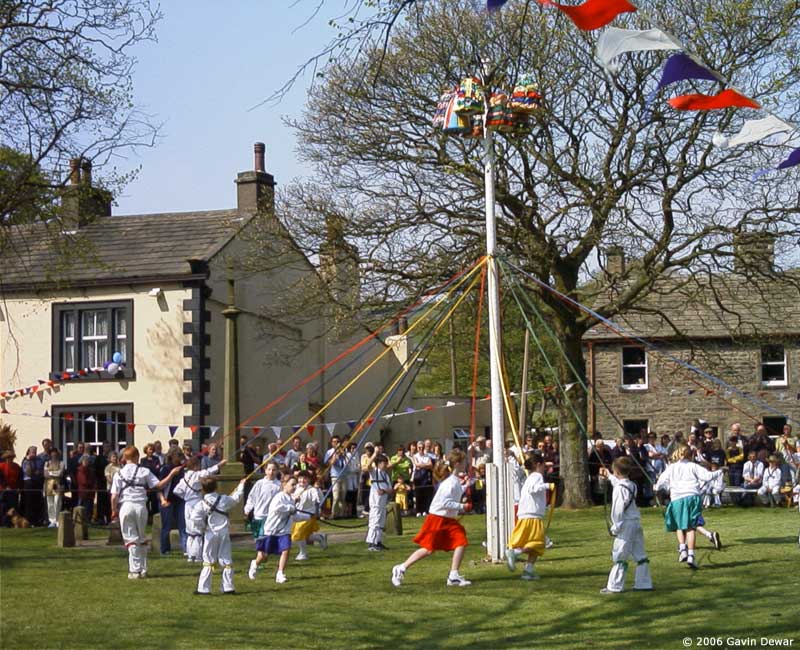
Dancing round the maypole in Long Preston

Having been out ‘a-maying’ the night before to gather what was needed, homes and villages would have been decorated with flowers and greenery in the belief that this would bring good fortune. Young women washed their faces with morning dew to make themselves beautiful for the rest of the year and would create garlands of flowers and foliage – with one girl chosen as May Queen to be crowned during the celebrations.

On a darker note, country people lived in fear of evil spirits, devising many ways of keeping them out of their houses, and May Day was no exception with faeries and witches said to be particularly busy. Surrounding your home and garden with plants known to repel them and send a firm warning message was a good start. The two most powerful trees were rowan – known as witchwood in Yorkshire and Cumbria - and hazel, and it made sense to pin branches to the front door and tie twigs to the milking pail in case they tried to turn the milk sour.

A foolish person might also ignore the ancient advice that one shouldn’t buy a broom in May or wash a blanket, and that cats born this month were, sadly, not destined to be good rat catchers.

And if you’ve an inclination at this time of year to make some vitamin-packed nettle tea or soup, folklore states that the leaves should be picked before 1 May because after that the Devil uses them to make his shirts. You have been warned.

Finally, don’t forget, ‘ne`er cast a clout till May is out’. In other words, don’t take off your winter clothes until the end of the month - or until the mayflower has finished flowering. Whichever way you interpret it, even the sturdiest of Yorkshire folk might want to wait a few weeks before breaking out the shorts!  

For more on rural traditions and way of life in Yorkshire, why not pay the Dales Countryside Museum in Hawes a visit this bank holiday weekend? Opening times and info at www.yorkshiredales.org.uk/dcm 

Tuesday, 24 April 2012

Clashes on the road to right to roam

Eighty years ago today perhaps the most significant – and certainly the most iconic - event in the story of UK National Parks played out on the moors of the Peak District.

Mass trespass on Kinder Scout, 1932
On 24 April 1932, ramblers took part in a mass trespass on Kinder Scout, the highest point in the area, publicly declaring their belief in their right to roam in open countryside.

Scuffles with the Duke of Devonshire’s gamekeepers broke out, several walkers were arrested and five were imprisoned on charges of incitement and riotous assembly.

The trespass had a far-reaching impact. It led not only to legislation giving walkers freedom to roam over open country and common land - finally achieved by the Countryside and Rights of Way (CRoW) Act of 2000 - but also to the creation of our National Parks, the Peak District being the first in 1951.

The first national parks had been set up in America in the 1860s when the government saw the need to protect wilderness areas from exploitation and make them available for all to enjoy.

Although Britain at that time had no such wild areas - our moors and mountains were nearly all farmed or managed in some way - influential individuals recognised that increased industrialisation was a threat to the beauty of our more remote countryside.
They founded conservation organisations such as the National Trust and began to lobby for more formal protection from the government.

At the same time social reformers pressed that it should be the right of all to enjoy the clean air and spiritual refreshment offered by walking in open countryside. Movements such as the Co-operative Holidays’ Association brought young factory workers on outings, even opening their own guesthouses such as the one at Hebden in 1909.

By the 1930s more and more working class people were seeking an escape from towns and cities - tens of thousands used their Sundays to go walking - and there was growing conflict with landowners.

At Kinder Scout, the trespassers were motivated by the issue of access. The moor was used for game shooting for just a few weeks each year and deserted the rest of the time, with walkers not allowed. The protesters wanted a public path, allowing ramblers access when the land was not in use. At that time less than 1% of the Peak District had public access rights and if walkers strayed onto private land they would be chased off by gamekeepers with sticks and dogs.

The arrest of the trespassers unleashed a wave of public sympathy. A few weeks later 10,000 assembled for a rally at Winnats Pass, near Castleton – the largest number ever - and the pressure for greater access continued to grow.

At the end of World War II, the government set up committees to examine long term land use and ‘nature preservation’ became part of the post-war reconstruction effort. In 1949 the National Parks and Access to the Countryside Act was passed and ten national parks were created over the following decade, the Yorkshire Dales National Park in 1954.

Thanks to the pre-war campaigns there was an emphasis on making countryside available for recreation for all, not just for nature conservation, and this principle remains at the heart of our National Parks.

John Dower
Malham Youth Hostel, opened in 1938, was designed by architect and rambler John Dower, and was the first purpose-built Youth Hostel in Yorkshire. Considered the founding father of National Parks, John – as Secretary of the Standing Committee on National Parks - was asked to prepare a report on how they could work in England and Wales. John believed passionately that the countryside should be there for all to enjoy, whatever their background, and the Youth Hostel movement was one of the ways that young working class people at that time could access these beautiful places. The hostel was dedicated to John’s memory in 1948.
 

For ideas on where to walk in the Yorkshire Dales National Park go to www.yorkshiredales.org.uk/walking